


Przejdź do informacji o produkcie
-
 Galeria multimediów
-
 Galeria multimediów
-
 Galeria multimediów
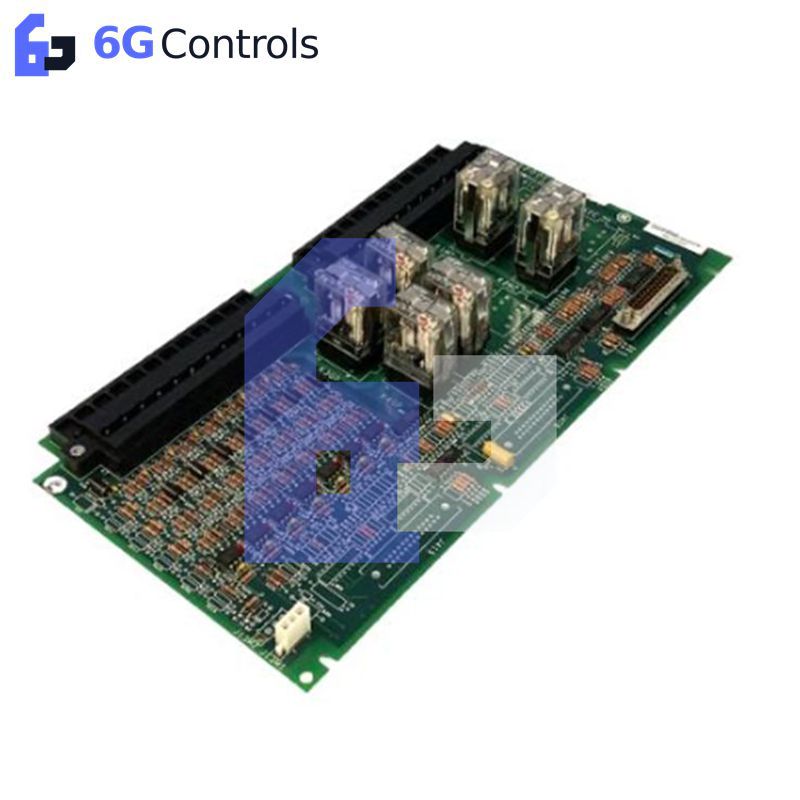
GE IS200ECTBG2ADE EX2100 Exciter Contact Terminal Board
11 w magazynie
- Manufacturer: General Electric
- Product No.: IS200ECTBG2ADE
- Product Type: EX2100 Exciter Contact Terminal Board
- Condition: Fabrycznie nowy
- Payment: T/T, Western Union
- Weight: 0.34 kg
- Shipping port: Xiamen
- Warranty: 12 miesięcy
Nie udało się załadować dostępności odbioru osobistego


Otrzymaj powiadomienie e-mailem, gdy ten produkt będzie dostępny
- Opis
- Reviews
- Wysyłka i płatność
The GE IS200ECTBG2ADE is an Exciter Contact Terminal Board for the EX2100 excitation control system. It provides field contact input monitoring and relay output interfaces between external equipment and the excitation controller. Designed for simplex operation, the board handles trip contacts, general-purpose relay outputs, and auxiliary contact signals using separate relay control and contact wetting voltages.
Functional Description
The ECTB provides electrical interfaces for contact signals associated with generator excitation control. Its relay outputs allow the controller to operate external circuits, while its contact input circuits monitor the status of customer-supplied auxiliary contacts.
The board includes two trip relay outputs and four general-purpose Form-C relay outputs. The latter provide normally open, normally closed, and common terminals for external circuit switching. Relay operation is controlled by the excitation controller through the EMIO interface.
Contact Input and Relay Configuration
The contact input circuits use a nominal 70 V DC wetting supply to detect external contact states. This arrangement allows the controller to monitor auxiliary contacts and dedicated generator status and lockout signals.
The distinction between the board's voltage ratings is important: 24 V DC supplies the relay control circuits, 125 V DC is the nominal customer supply for relay contacts, and 70 V DC provides contact wetting for input monitoring. These voltages serve different circuit functions.
Relay Contact Ratings
The general-purpose relay contacts use a customer-supplied DC power circuit. Their breaking capacity depends on the load type and operating voltage, rather than being represented by a single universal current rating.
According to the EX2100 control guide, the general-purpose relay contact characteristics include:
- Resistive load: 2 A at 28 V DC or 0.5 A at 125 V DC.
- Inductive load: 1 A at 28 V DC or 0.1 A at 125 V DC.
- Inductive load rating is specified at an L/R time constant of 0.007 s.
- External suppression must be provided by the customer for inductive loads.
These ratings should be checked against the actual external load before connecting field circuits.
Technical Specifications
| Parameter | Specification |
|---|---|
| Model | IS200ECTBG2ADE |
| Brand | General Electric (GE) |
| Series | EX2100 |
| Product Type | Exciter Contact Terminal Board |
| Operational Mode | Simplex only |
| Trip Relay Outputs | 2 |
| General-Purpose Relay Outputs | 4 Form-C |
| Auxiliary Contact Inputs | 6 |
| Dedicated Contact Inputs | 52G, 86G |
| Relay Control Voltage | 24 V DC |
| Customer Power | 125 V DC nominal |
| Contact Wetting Voltage | 70 V DC |
| Relay Break Characteristic | 28 V DC |
| Weight | 0.34 kg |
| Dimensions | 150 x 76 x 90 mm |
Simplex Configuration and System Interface
The ECTBG2 configuration is intended for simplex EX2100 control. Its contact signals are connected to the M1 controller, rather than being distributed across multiple controllers for redundant voting.
The distinction between ECTBG1 and ECTBG2 is important when identifying replacement hardware. ECTBG1 supports redundant control with a two-out-of-three relay voting arrangement, whereas ECTBG2 is designed for simplex operation. These configurations should not be treated as interchangeable.
Frequently Asked Questions
Q: Can the IS200ECTBG2ADE be used in a redundant EX2100 control system?
A: No. The ECTBG2 configuration is intended for simplex operation. The ECTBG1 version is used for redundant control and has a different controller interface and relay voting arrangement.
Q: What is the difference between the 24 V DC and 125 V DC supplies?
A: The 24 V DC supply operates the relay control circuits, while the nominal 125 V DC customer supply is switched through the relay contacts to external circuits. They perform different electrical functions and should not be interchanged.
Q: What is the purpose of the 70 V DC wetting voltage?
A: It provides the electrical excitation required to monitor external contact states. The board uses this voltage for auxiliary contact monitoring and dedicated 52G and 86G status inputs.
Płatność: T/T, Western Union.
Port wysyłki: Xiamen.
Czas realizacji: Zazwyczaj 1–3 dni robocze po potwierdzeniu płatności (w zależności od dostępności).
Dostawa na cały świat: Wysyłamy części do automatyki przemysłowej klientom na całym świecie. Koszt transportu jest podawany wraz z wyceną na podstawie zapytania ofertowego.
Najczęściej zadawane pytania
Często zadawane pytania dotyczące wycen, wysyłki, gwarancji i zwrotówNa stronie produktu kliknij Poproś o wycenę i prześlij nam numer części, wymaganą ilość oraz kraj docelowy. Nasz zespół sprzedaży odpowie, podając aktualną dostępność, cenę i szacowany czas dostawy.
Produkty dostępne w magazynie są zazwyczaj przygotowywane po dokonaniu płatności i potwierdzeniu zamówienia. Większość zamówień jest wysyłana z naszego magazynu w Chinach, choć miejsce wysyłki może się różnić w zależności od aktualnego stanu magazynowego.
Tak. Wysyłamy części do automatyki przemysłowej klientom na całym świecie. Koszt wysyłki i czas transportu zależą od miejsca docelowego, wagi przesyłki, rozmiaru produktu oraz lokalnych wymogów importowych.
Najczęściej korzystamy z usług DHL, FedEx, UPS i innych międzynarodowych firm kurierskich. Przewoźnika można wybrać w zależności od miejsca docelowego, szybkości dostawy, rozmiaru przesyłki i wymagań klienta.
Nasze produkty są zazwyczaj objęte 12-miesięczną gwarancją. Produkty spełniające odpowiednie warunki można również zwrócić zgodnie z naszą 30-dniową polityką zwrotu pieniędzy. Przed zwrotem dowolnego produktu skontaktuj się z naszym zespołem, aby potwierdzić obowiązujące warunki i instrukcje dotyczące zwrotu.

Możesz też polubić
Wpisy na blogu
Wiadomości o automatyce przemysłowej, poradniki techniczne i aktualizacje produktów.


