

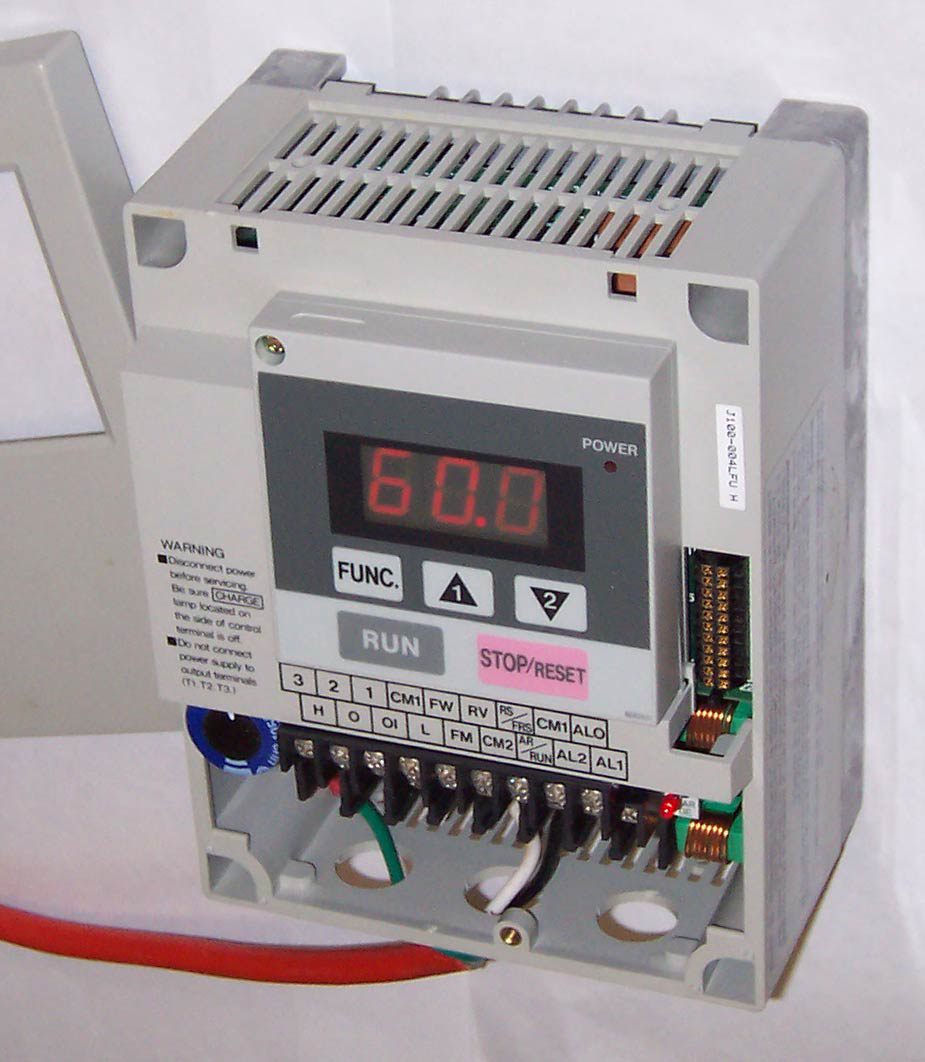
Variable Frequency Drives (VFDs) are power transmission control devices used to regulate the speed and torque of motors. There are several commonly used control methods in VFDs:
V/F Control
V/F control adjusts the voltage and frequency supplied to the motor to control its speed and output power. It is the simplest and most widely used control method, but it has lower output waveform quality and response speed.
Vector Control
Vector control is a complex control method that enables precise control of motor speed and torque, improving system response speed and output waveform quality. It achieves this by sensing the rotor position and speed of the motor to control the current and voltage.
Direct Torque Control
Direct Torque Control is a control method based on a motor parameter model, allowing for high-precision torque control in a short period. It requires detailed motor modeling and parameter adjustments but can significantly improve system response speed and closed-loop stability.
Future Directions in VFDs
Digitization
With the development of embedded technology, communication technology, and cloud computing, VFDs can achieve remote monitoring and control, enhancing equipment reliability and operational efficiency.
Intelligentization
Intelligentization is the future trend of VFD development, incorporating technologies such as adaptive control, learning control, and multi-mode control. These technologies can improve system stability and response speed.
Integration
Integration involves integrating VFDs with motors, sensors, and other devices to create intelligent and efficient power transmission systems. This reduces equipment size, weight, and cost while improving system performance and reliability.
Conclusion:
In conclusion, variable frequency drives offer various control methods, including V/F control, vector control, and direct torque control. The future of VFDs lies in digitization, intelligentization, and integration. These advancements will enhance the functionality and efficiency of power transmission systems, revolutionizing the field of motor control.
