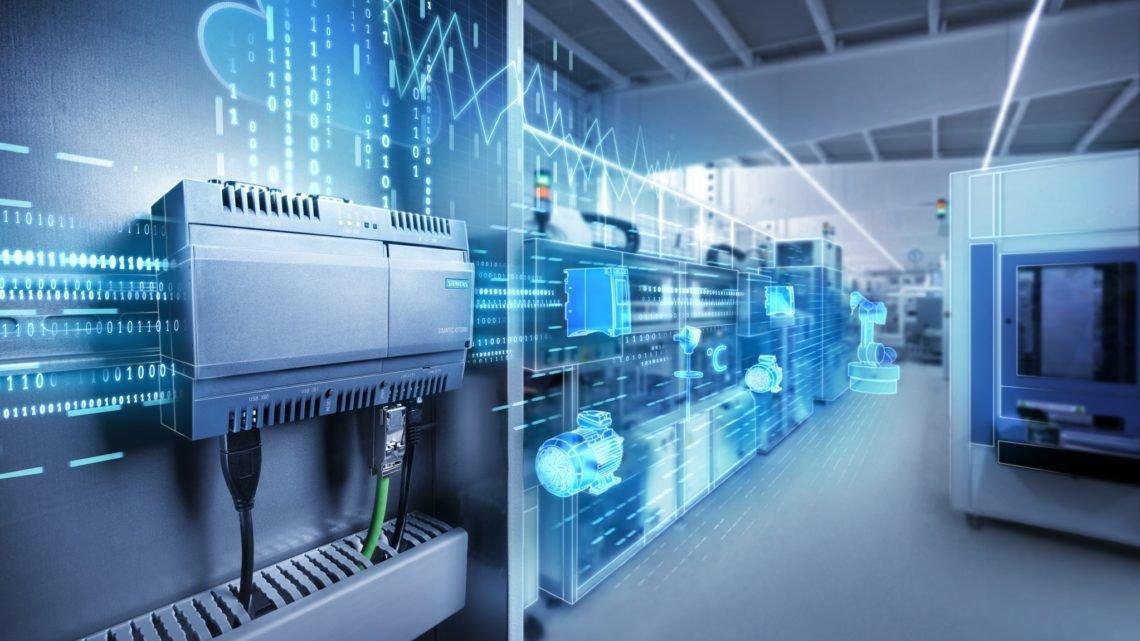

The Industrial Internet: From Automation to Collaboration
Modern factories are no longer just automated—they are interconnected digital ecosystems. Robotic arms, AGV trolleys, and real-time data dashboards illustrate the seamless integration of equipment, data, and human decision-making. This “digital neural network” transforms isolated production lines into collaborative, optimized, and evolvable industrial operations. As an automation engineer, I see this shift as a critical step: the industry is moving from simply being capable of automation to achieving system-level intelligence.
The Quest for an Industrial Operating System
While the 14th Five-Year Plan focused on connectivity and cloud-based operations, the real challenge today lies in system-level scalability. Traditional industrial platforms were tools for individual projects, but replicating these solutions across different factories, industries, and processes remains a significant bottleneck. A true industrial operating system must enable long-term stability, support intelligent decision-making, and bridge fragmented industrial environments—essentially functioning like the OS of a factory or industrial chain.
COSMOPlat: From Platform to System-Level Intelligence
Haier Kaos’s COSMOPlat demonstrates how an industrial platform can evolve into an intelligent infrastructure. By integrating software, hardware, and platform capabilities, it creates a foundation for cross-industry replicability. The platform’s Tianzhi Industrial Large-scale Model acts as the “industrial brain,” scheduling data, business, and capital flows simultaneously. Unlike traditional analytics platforms, this system orchestrates real-time operations across production scheduling, quality control, and supply-chain collaboration, turning post-event insights into preemptive action.
Breaking Data and Process Barriers
In cases like Yanchang Petroleum Group, COSMOPlat eliminates information silos and unifies fragmented processes—from R&D to production execution. Intelligent agents coordinate material development and production seamlessly, allowing cross-industry collaboration that was previously unthinkable. As an engineer, I see this as the real value of system-level AI: not simply processing data, but enabling the actionable integration of workflows across organizational and industrial boundaries.
ONE-COSMO: A Unified Industrial Operating System
Haier Kaos’s ONE-COSMO framework embodies the industrial operating system concept. It redefines industrial challenges across three levels—scenarios, enterprises, and industries—allowing a single system to manage diverse complexity. The framework is split into two complementary paths: the Lighthouse Factory for factory-level intelligence, and the Industrial Cloud Brain for broader industrial-chain collaboration. This stratification ensures that operational replication and scalability are embedded in the system architecture, addressing the limitations of traditional project-based implementations.
Lighthouse Factories: Replicable Intelligence at the Factory Level
Lighthouse factories exemplify system-level replication. By integrating production planning, energy systems, and AI-driven scheduling into a unified architecture, factories like Haier Tianjin’s Washing Machine Connected Factory achieve sustainable operations. Energy efficiency, carbon reduction, and flexible manufacturing are embedded into daily operations, not just demonstrated as one-off technological achievements. For engineers, this highlights a crucial insight: true industrial transformation requires aligning AI intelligence with real-world production constraints.
Industrial Cloud Brain: Collaboration Across Industries
As intelligence extends beyond individual factories, the Industrial Cloud Brain coordinates resources and decision-making across parks, enterprises, and industrial chains. By enabling data flow and standardized collaboration, it addresses the challenges of cross-enterprise efficiency and scalability. Projects like Woerxin’s adoption demonstrate measurable improvements in defect rates, delivery cycles, and market responsiveness. The cloud brain is a testament to how the industrial Internet is gradually evolving into a systemic operating model.
Looking Ahead: Systemic Evolution Defines the Future
The industrial Internet is no longer about isolated tools or platforms. Success depends on the ability to build a system that evolves over time, replicates across scenarios, and supports large-scale collaboration. Haier Kaos, through COSMOPlat and ONE-COSMO, is raising the bar for industrial platforms, moving the industry closer to a true operating system capable of redefining manufacturing at scale. The lesson for engineers is clear: future-proof industrial systems require both technological integration and strategic vision.