


Accéder aux informations sur le produit
-
 Galerie multimédia
-
 Galerie multimédia
-
 Galerie multimédia
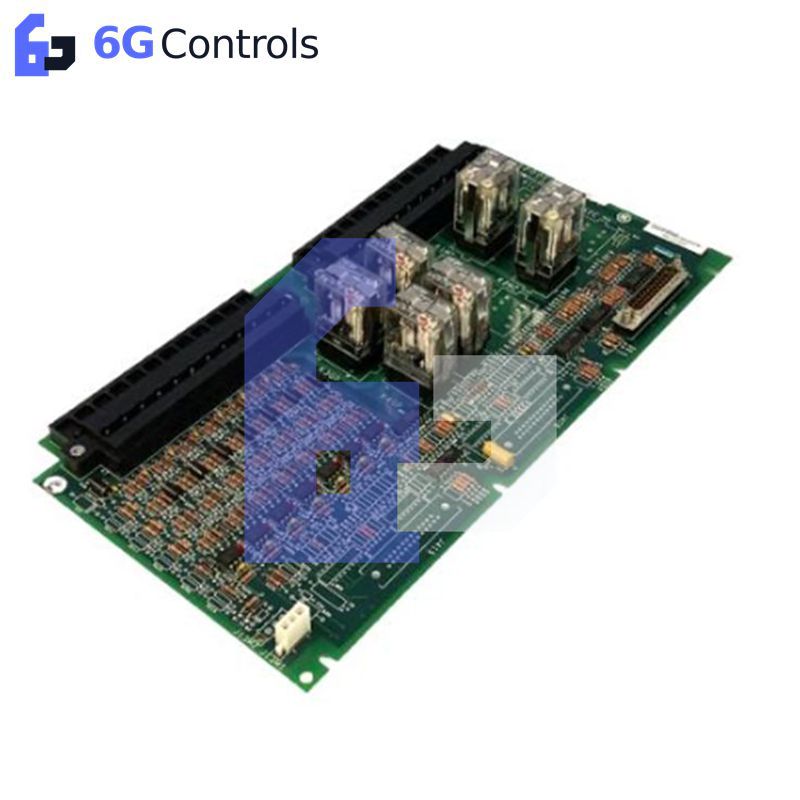
GE IS200ECTBG2ADE EX2100 Exciter Contact Terminal Board
11 en stock
- Manufacturer: General Electric
- Product No.: IS200ECTBG2ADE
- Product Type: EX2100 Exciter Contact Terminal Board
- Condition: Tout neuf
- Payment: Virement télégraphique, Western Union
- Weight: 0.34 kg
- Shipping port: Xiamen
- Warranty: 12 mois
Impossible de charger la disponibilité du retrait en magasin


Notification par e-mail lorsque ce produit sera disponible
- Description
- Reviews
- Livraison et paiement
The GE IS200ECTBG2ADE is an Exciter Contact Terminal Board for the EX2100 excitation control system. It provides field contact input monitoring and relay output interfaces between external equipment and the excitation controller. Designed for simplex operation, the board handles trip contacts, general-purpose relay outputs, and auxiliary contact signals using separate relay control and contact wetting voltages.
Functional Description
The ECTB provides electrical interfaces for contact signals associated with generator excitation control. Its relay outputs allow the controller to operate external circuits, while its contact input circuits monitor the status of customer-supplied auxiliary contacts.
The board includes two trip relay outputs and four general-purpose Form-C relay outputs. The latter provide normally open, normally closed, and common terminals for external circuit switching. Relay operation is controlled by the excitation controller through the EMIO interface.
Contact Input and Relay Configuration
The contact input circuits use a nominal 70 V DC wetting supply to detect external contact states. This arrangement allows the controller to monitor auxiliary contacts and dedicated generator status and lockout signals.
The distinction between the board's voltage ratings is important: 24 V DC supplies the relay control circuits, 125 V DC is the nominal customer supply for relay contacts, and 70 V DC provides contact wetting for input monitoring. These voltages serve different circuit functions.
Relay Contact Ratings
The general-purpose relay contacts use a customer-supplied DC power circuit. Their breaking capacity depends on the load type and operating voltage, rather than being represented by a single universal current rating.
According to the EX2100 control guide, the general-purpose relay contact characteristics include:
- Resistive load: 2 A at 28 V DC or 0.5 A at 125 V DC.
- Inductive load: 1 A at 28 V DC or 0.1 A at 125 V DC.
- Inductive load rating is specified at an L/R time constant of 0.007 s.
- External suppression must be provided by the customer for inductive loads.
These ratings should be checked against the actual external load before connecting field circuits.
Technical Specifications
| Parameter | Specification |
|---|---|
| Model | IS200ECTBG2ADE |
| Brand | General Electric (GE) |
| Series | EX2100 |
| Product Type | Exciter Contact Terminal Board |
| Operational Mode | Simplex only |
| Trip Relay Outputs | 2 |
| General-Purpose Relay Outputs | 4 Form-C |
| Auxiliary Contact Inputs | 6 |
| Dedicated Contact Inputs | 52G, 86G |
| Relay Control Voltage | 24 V DC |
| Customer Power | 125 V DC nominal |
| Contact Wetting Voltage | 70 V DC |
| Relay Break Characteristic | 28 V DC |
| Weight | 0.34 kg |
| Dimensions | 150 x 76 x 90 mm |
Simplex Configuration and System Interface
The ECTBG2 configuration is intended for simplex EX2100 control. Its contact signals are connected to the M1 controller, rather than being distributed across multiple controllers for redundant voting.
The distinction between ECTBG1 and ECTBG2 is important when identifying replacement hardware. ECTBG1 supports redundant control with a two-out-of-three relay voting arrangement, whereas ECTBG2 is designed for simplex operation. These configurations should not be treated as interchangeable.
Frequently Asked Questions
Q: Can the IS200ECTBG2ADE be used in a redundant EX2100 control system?
A: No. The ECTBG2 configuration is intended for simplex operation. The ECTBG1 version is used for redundant control and has a different controller interface and relay voting arrangement.
Q: What is the difference between the 24 V DC and 125 V DC supplies?
A: The 24 V DC supply operates the relay control circuits, while the nominal 125 V DC customer supply is switched through the relay contacts to external circuits. They perform different electrical functions and should not be interchanged.
Q: What is the purpose of the 70 V DC wetting voltage?
A: It provides the electrical excitation required to monitor external contact states. The board uses this voltage for auxiliary contact monitoring and dedicated 52G and 86G status inputs.
Paiement : virement bancaire, Western Union.
Port d’expédition : Xiamen.
Délai : généralement 1 à 3 jours ouvrés après confirmation du paiement (sous réserve des stocks).
Livraison dans le monde entier : nous expédions des pièces d’automatisation industrielle à des clients du monde entier. Les frais de transport sont indiqués avec votre demande de devis.
Foire aux questions (FAQ)
Questions fréquentes sur les devis, l’expédition, la garantie et les retoursCliquez sur Demander un devis sur la page du produit et envoyez-nous la référence, la quantité souhaitée et le pays de destination. Notre équipe commerciale vous répondra avec les disponibilités actuelles, le prix et le délai de livraison estimé.
Les articles en stock sont généralement préparés après le paiement et la confirmation de la commande. La plupart des commandes sont expédiées depuis notre entrepôt en Chine, bien que le lieu d’expédition puisse varier en fonction des stocks disponibles.
Oui. Nous expédions des pièces d’automatisation industrielle à des clients partout dans le monde. Les frais d’expédition et le délai de transport dépendent de la destination, du poids du colis, de la taille du produit et des exigences locales en matière d’importation.
Nous utilisons généralement DHL, FedEx, UPS et d’autres services de messagerie internationaux. Le transporteur peut être choisi en fonction de la destination, de la rapidité de livraison, de la taille de l’envoi et des exigences du client.
Nos produits sont généralement couverts par une garantie de 12 mois. Les produits admissibles peuvent également être retournés conformément à notre politique de remboursement sous 30 jours. Veuillez contacter notre équipe avant de retourner tout article afin de confirmer les conditions applicables et les instructions de retour.

Vous aimerez peut-être aussi
Articles de blog
Actualités sur l’automatisation industrielle, guides techniques et mises à jour des produits.


